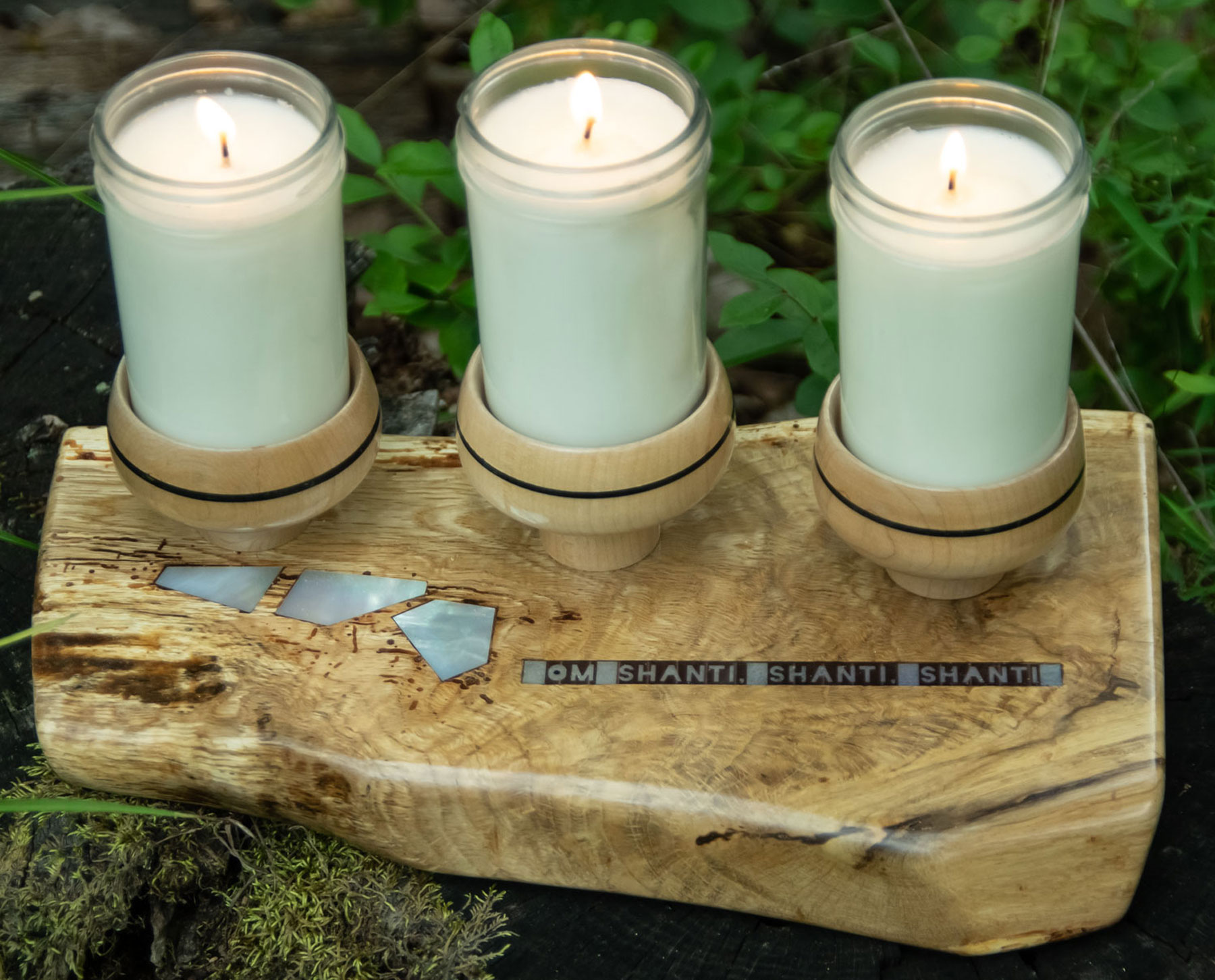
Finding Stillness: The Art of the Tri-Shanti Shrine In a world that moves too fast, there is profound rebellion in stillness. The Tri-Shanti Shrine is not merely a candle holder—it is an invitation to pause, to breathe, and to remember what peace actually feels like. At first glance, you see three white candles resting in hand-turned wooden cups, their flames dancing in quiet synchronization. But look closer, and the piece reveals itself as a meditation on intentionality. The base is spalted maple, its honey-toned surface threaded with dark mineral lines that map years of slow transformation. These are not imperfections; they are the wood's history made visible, decay held in suspension until it became beauty. In this way, the material itself teaches the first lesson of the piece: that peace often emerges from weathering. The turned cups cradle refillable glass votives—nine jars included with the piece, enough to sustain years of practice. This is sustainability as spirituality, a rejection of the disposable in favor of the enduring. Sacred objects should not be temporary. Each time you refill a jar, you participate in the ritual of renewal. Below the candles, small inlaid tiles spell out Om Shanti. Shanti. Shanti.—the ancient Sanskrit mantra that closes traditional yoga practice. The repetition is intentional: the first Shanti calls for peace within the body, the second for peace within the mind, and the third for peace in spirit or surroundings. The three candles become physical manifestations of this threefold prayer, their flames standing guard over the words. To the left, fragments of mother-of-pearl catch the light differently than wood or wax, shimmering with an iridescence that seems to come from within. These pieces represent those rare, luminous moments of clarity that emerge unexpectedly during meditation—fleeting but unforgettable, like light through water.
Comments